
Kenneth Walker III Ran for 173 Yards in Kansas City. Which of His Cards Move First.
The 60-yard burst is the number that matters most. Volume stats move base cards; breakaway speed moves ceiling narratives, and ceiling narratives are what low-numbered parallels are priced on.
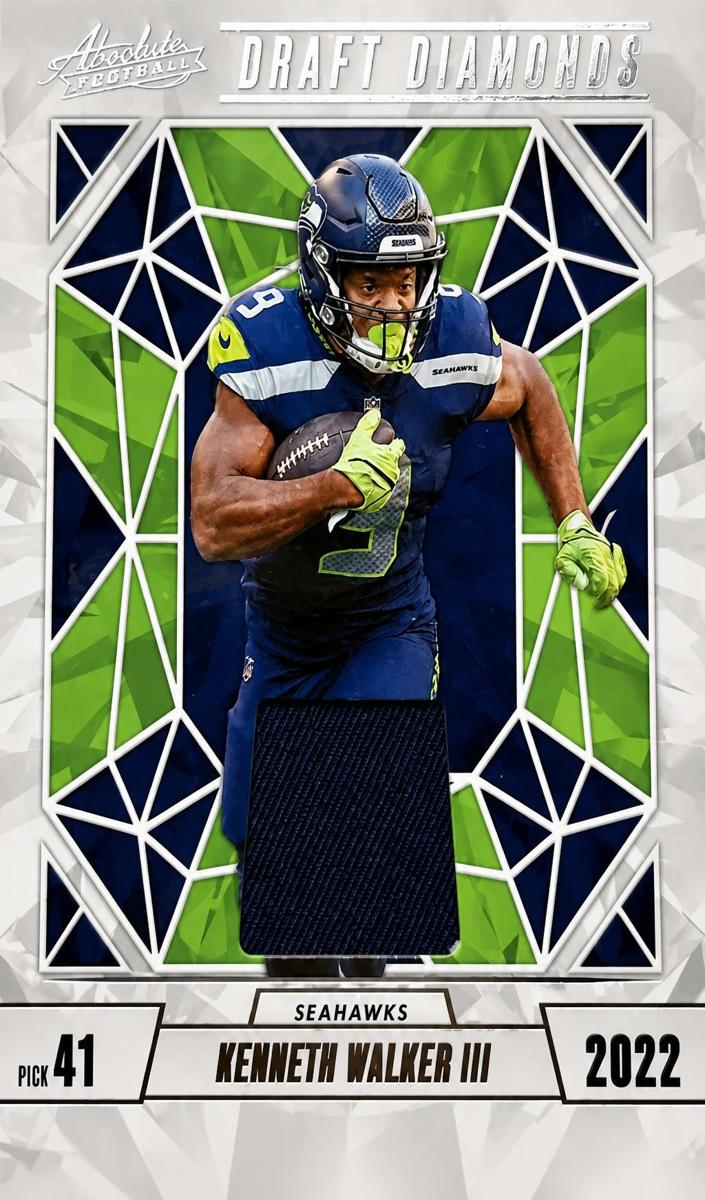
A full-workload performance against Kansas City carries a credibility premium the market prices separately from raw yardage, and the 60-yard long introduces a ceiling conversation that low-numbered parallels and autos haven't fully absorbed yet.
- Walker posted 23 carries, 173 yards, a 60-yard long, and two touchdowns against Kansas City, a full-workload declaration, not a usage blip.
- Kansas City functions as a credibility stamp; the market historically prices performances in that building above equivalent volume games elsewhere.
- The 60-yard burst is the sleeper number: breakaway speed shifts the ceiling narrative, which is what moves low-print parallels and autos, not base cards.
- Base RCs and mid-tier parallels are most exposed to an immediate pop: holders in those tiers have the strongest case to move into liquidity now.
- Low-numbered autos and short-print parallels tend to lag the volume pop by 24 to 48 hours, so that window is not yet closed.
- Anyone buying into Walker on this performance is buying after the news: the real question is whether the ceiling re-rate justifies entry at post-game prices.
- The durability argument for holders strengthens with a 23-carry workload: that is the usage signal that sustains a market beyond a single week.
Twenty-three carries, a 60-yard burst, and two touchdowns in Arrowhead. That is not a usage blip — that is a workload declaration, delivered in the building where the market pays the most attention. Kenneth Walker III's 173-yard performance against Kansas City on September 15 is already moving his card market, and the question for holders is not whether prices are up. It is which tier reprices first, which lags, and whether the window on any of them is still open.
Why Kansas City Changes the Calculus
Not all 173-yard games are equal in the card market. A big number against a soft run defense gets processed as a volume stat. A big number against Kansas City gets processed as a credibility event. The Chiefs' defense carries enough prestige that a dominant rushing performance there functions as a separate signal to buyers, one that justifies a premium above what the raw line would otherwise support. That premium shows up fastest in mid-tier parallels, where buyers are making narrative-driven decisions rather than strict comp-based ones.
The critical question for holders is how much of that Kansas City premium is genuinely new information versus already baked in from Walker's prior strong outings. If the market has seen this before and priced it, the pop is smaller. If this is the first time Walker has posted a workload this complete in a high-profile spot, there is more room to run.
The 60-Yard Long Is the Number That Actually Moves Low-Print Paper
Volume stats, carries, total yards, move base rookies and mid-tier parallels. They confirm usage, and usage is the floor argument. The 60-yard long does something different: it opens the ceiling conversation. Breakaway speed on a back who is already getting 23 carries a game forces the market to ask how big the upside actually is, and that question is exactly what low-numbered autos and short-print parallels are priced on.
If the market is still processing Walker's day as a yardage game rather than a speed-and-ceiling game, the low-print paper is the last card tier to reprice. That lag is where a holder has an edge. The counter-argument is real: a single 60-yard run can be scheme-generated, a crease that opened once and may not open again. The market will eventually ask whether the burst translates into a durable ceiling re-rate or gets discounted as a one-off. Holders of low-numbered material have roughly 24 to 48 hours before that debate resolves in prices.
What Holders Should Do by Card Tier
Base rookie cards and mid-tier parallels are the most exposed to an immediate pop, and holders in those tiers are in the strongest position to move into liquidity right now. Casual buyers reacting to the box score will push those comps up in the hours after the game; that is the window, and it is measured in hours, not days. If you are holding Walker base RCs as a trade position rather than a long-term hold, this is the moment the market gives you.
Low-numbered autos and short-print parallels are a different call. The ceiling-narrative repricing on those cards lags the volume pop, which means the window is not yet closed: but it is closing. Holders who believe in the breakaway-speed argument have a short runway to either add at current prices before the re-rate or to sell into the demand that the base-card pop generates. Anyone looking to buy into Walker on this performance should be clear-eyed: they are buying after the news. The only justification for entry at post-game prices is a genuine conviction that the ceiling re-rate is not yet fully reflected in low-print comps.
The 23-carry workload is the durability signal that sustains a market beyond one week. That is the argument holders need if Walker's prices hold into the following game. A back who gets that kind of usage in a full-game context is not a committee back, and the market prices committee risk heavily in RB cards. If Seattle's offensive line and usage splits hold steady, that workload argument gets stronger each week.
The 60-yard long is the sleeper number in this line. Volume stats move base cards. Breakaway speed moves the ceiling narrative, and ceiling narrative is what low-numbered parallels are priced on.
Three things will determine whether Walker's card market sustains or fades. First, whether this performance accelerates a durable Walker market or represents a one-week spike that fades if Seattle's offensive line or usage splits shift. Second, how much of the Kansas City credibility premium is genuinely new information versus already priced in from prior strong outings. Third, whether the 60-yard long gets treated as a repeatable breakaway threat or discounted as a single scheme-generated play. The market will answer all three over the next week, and the answers will show up in low-numbered comps before they show up anywhere else.
If the 60-yard burst gets discounted as a scheme play rather than a true speed re-rate, does the Kansas City credibility premium alone justify holding low-numbered Walker autos at post-game prices?